
Summerville, SC

In Summerville, the Norfolk Southern still rumbles down the railway tracks between Luke and Doty avenues. The soda fountain at Guerin’s, the oldest pharmacy in the state, burbles up sweet treats for smiling children, just as it has for generations. But one aspect of local life is even older than these venerable routines. As far back as 1847, Summerville’s civic leaders placed an ordinance on the books protecting the town’s grand trees. Protecting and enjoying the outdoors have been a part of life in “Flowertown in the Pines” from the very beginning. 


Indeed, the Latin motto on Summerville’s civic seal, “Sacra Pinus Esto,” says it all: “The Pine is Sacred.” Scientists and physicians believed the town’s air, “charged with the derivatives of turpentine,” had healing powers. This claim was prominently asserted on the world stage at a conference on tuberculosis treatment held in Paris in the 1890s. Soon thereafter, Summerville’s resort hotels were filled with visitors coming to rest and recuperate in the town’s cool, piney breezes. While developers built a multitude of facilities, the grande dame of these retreats was the Pine Forest Inn, which boasted tennis courts, stables, bowling, golf, a vast network of trails and even a 150-seat “rocking chair room,” considered world-class comforts in their era and proof positive that Summerville has long known how to relax and enjoy itself in style.


While the nearly 180-year-old town has grown dramatically in the past few decades, it is still a place where tradition runs as deep as the roots of a longleaf pine. Realtor Taylor Charpia was born and raised in Summerville; today, his team leads the market in luxury sales in the area, having already sold ten homes at a price of a million dollars or higher this year. While the town has a longstanding reputation for affordability, Charpia says it’s about much more than that. “Many of my clients are coming from Downtown Charleston, the Old Village in Mt. Pleasant … they’re finding historic homes, homes on acreage, where you can walk or take your golf cart downtown. For many buyers, it’s like Mt. Pleasant’s Old Village, just without the prices.”


Summerville isn’t just appealing to the wallet, though. As Realtor Roni Haskell notes, “Fewer people are coming for the price — they’re coming for community and they’re coming for the amenities.” She suggests the new Ashley River Preserve as paradigmatic of the town’s ever-growing commitment to excellent outdoor spaces. “There’s this huge river nestled right by the edge of town that we just haven’t been able to tap into for years … now there are trails, a splashpad, fishing, canoes and kayaks and more.” The opening of the new 43-acre riparian park abutting the Ashley River and Eagle Creek “serves a great diversity of people and interests,” she notes.


Summerville Parks and Recreation’s role in the community could hardly be overstated. From traditional, well-maintained downtown playgrounds like Huger Park, to the nearly seven-mile long Sawmill Branch Trail for walkers and bicyclists, to a municipal boat landing, skate park, pickleball courts, a BMX park, the tournament-grade team sports facility at Gahagan Park and more, the town provides a great quantity and wide selection of high-quality recreation opportunities for its citizens.


Old favorites in full bloom


For as many new amenities as the town enjoys, sometimes it’s the classic venues that mean the most. “Hutchinson Square is definitely my favorite greenspace in Summerville,” Charpia says, referencing the small, handsomely appointed park centrally located on South Main Street. “I’ll go, have a hot dog and a Diet Coke, and just people watch. They redid it about a decade ago, and it was a little controversial, but I think the changes are very well done.” Realtor Pam Bass gives a nod to Azalea Park, an iconic 16-acre flower-filled treasure in the heart of town. “It’s not only beautiful with its gardens, trails and sculptures, but it’s also the centerpiece of the town’s famous Flowertown Festival each spring.” 


Events like the Flowertown Festival, a springtime tradition for over 50 years that now draws crowds of hundreds of thousands, demonstrate that Summerville offers numerous good reasons to get out and have fun. “There’s the restaurant scene, lots of events like Third Thursdays (a monthly outdoor arts-and-crafts marketplace), the Italian Feast, the Flowertown Festival -- there’s always an event,” offers Charpia. “You can do as little or as much as you want.” Bass notes, “There’s a real sense of community, with local festivals, farmers markets and neighbors who know each other by name.”


SC Wildlife Federation to Host Forks, Knives, & Spoonbills Conservation Dinner

NEXT UP

SC Wildlife Federation to Host Forks, Knives, & Spoonbills Conservation Dinner

Often, this sense of community becomes the selling point. According to Haskell, the town pitches itself to prospective homebuyers: “It’s a community -- you go out to the shops, go dining, hit up a boutique and you’re going to run into friends. The culture is really strong here; it makes people want to plant deep roots. When people visit, that’s what attracts them to stay.”


“We are seeing a great mix [of people],” Bass declares regarding Summerville homebuyers. “Families moving for the schools, retirees looking for a slower pace and professionals relocating for jobs in Charleston or the Boeing and Volvo plants nearby.” But at the heart of it, she, too, notes Summerville’s “vibrant small-town feel” and “strong sense of community.” Charpia discusses what might be the simplest and surest way to showcase Summerville’s appeal: “I take clients to pregame on a Friday night football.” 


From sleepy hamlet to thriving hub


Of course, there’s more to Summerville than the charming Victorian homes that encircle the orderly downtown commercial district — there’s even more than Green Wave football. There’d have to be: From a population of less than 6,500 in 1980, to roughly 22,500 at the turn of the millennium, to more than 50,000 residents today, the once-tiny burg has grown to cover much more territory than in its recent past. “The roads are catching up,” Haskell says. “The infrastructure is coming online. Dorchester and Berkeley County schools are in full growth mode around Summerville, and new parks and recreation opportunities are on the way. It’s all finally really catching up to years of steady growth.” Charpia went even further: “We’ve been blessed with really good leadership, a council and mayor who are willing to make a lot of significant investment in the town.”


Bass notes the result of such wise leadership. “It’s gone from a quaint small town to a thriving hub with shopping, dining and master-planned communities — but it’s done so thoughtfully.” She points to neighborhoods like The Summit and Gadsden Manor for their large lots, established landscapes and accessibility to the town’s historic core. Further afield? “Nexton or Summers Corner … they’ve really mastered the concept of lifestyle communities.”


“Water! That’s what buyers want,” says Haskell. The area’s newest neighborhoods boast some truly enviable high-end aquatic amenities. To wit: The Club at Summers Corner is less a community pool and more a nexus of watery fun plucked from some sunny, five-star all-inclusive resort in the Caribbean. Two giant waterslides tower over a giant beach-entry pool, a splash park for little ones, an adults-only pool with a “Tikihut” bar (one of three at the site) and a covered gathering space with fire pits. Haskell also points to new facilities at Carnes Crossroads, such as “The Perch” (another resort-style community pool) and “The Lake House,” a handsome farmhouse-style amenity center with a cafe, meeting spaces, and even a farm store for community-grown produce.


Really, it feels like things have come full circle. Summerville first found fame during its golden age of resorts, when an appreciation for leisurely living, taking time to walk amongst the pines, and having a vigorous swim made the most of the outdoors, defined the era. In our own time, the legacy lives on. These activities (and many more) aren’t just part of a seasonal vacation; for an increasing number of Summerville homebuyers, they’re an integral part of everyday life. 

That SC Real Estate Chick's Blog

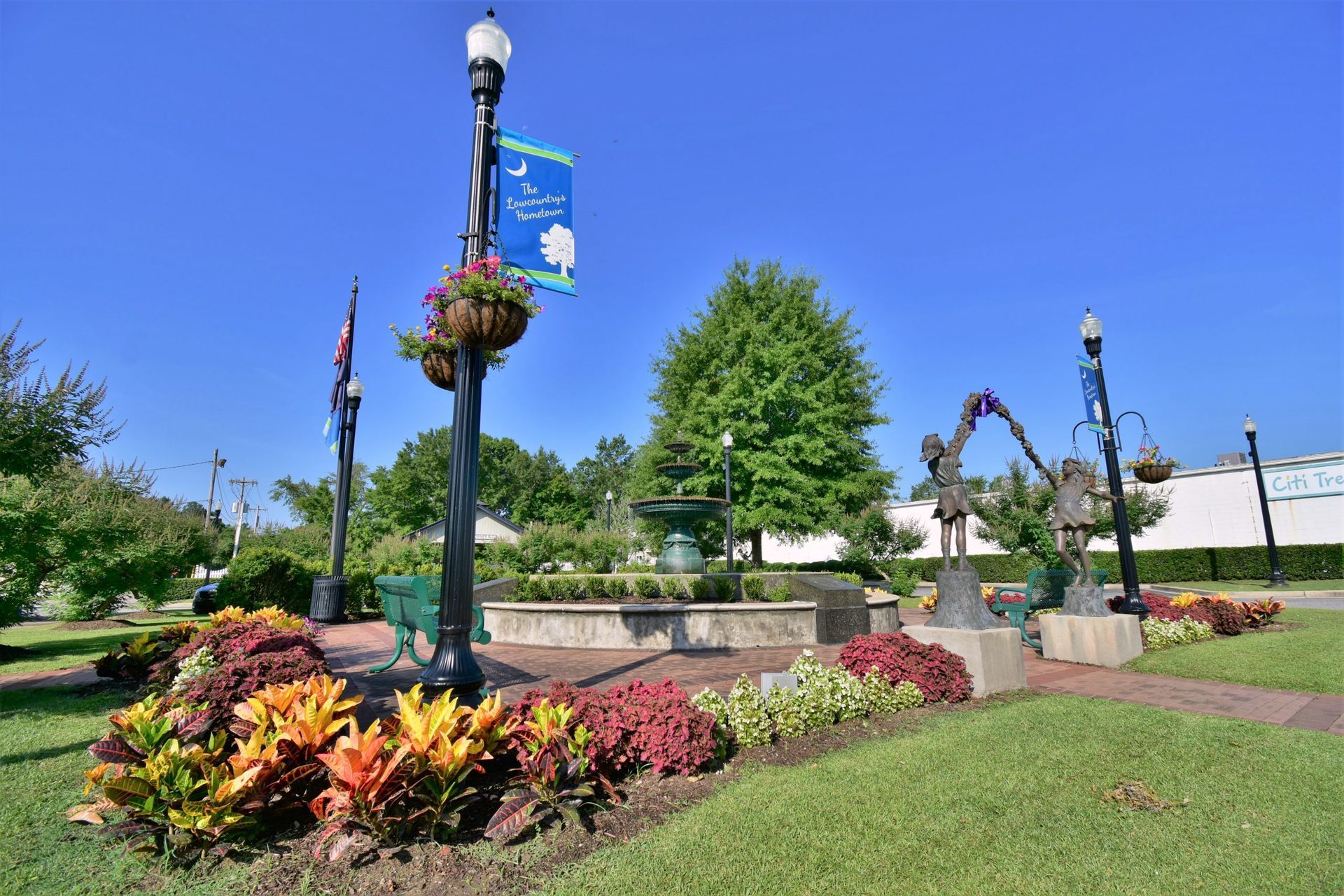
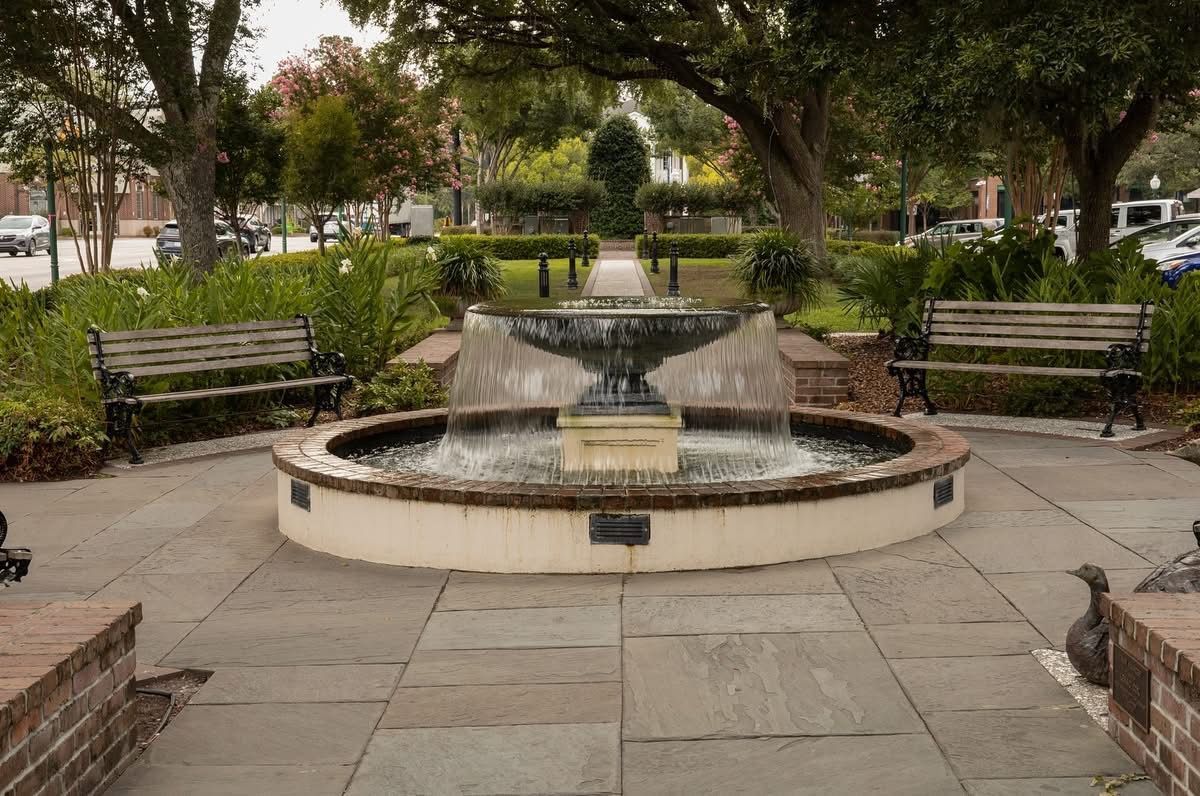
Fountain in a park setting, framed by green hedges and palm trees, set against a watercolor sunset.
By Roni Haskell February 24, 2026
Hi friends! February buying activity continues to show steady momentum across the region. Contract volume is healthy and buyer demand remains present, even if the pace has not fully shifted into the spring surge yet. This past week delivered strong pricing signals, which is always an encouraging indicator for sellers watching the market closely. A total of 280 residential properties moved under contract. Single family attached activity accounted for 57 of those, including 6 sales above 1 million. The detached segment remained the primary driver with 215 homes going under contract. Median list price held firm at $565,000 with median price per square foot at $274. High end demand was clearly visible with 46 homes above 1 million. 
Park with a fountain, flower beds, sculptures, and lampposts under a blue sky.
By David Caraviello Special to The Post and Courier February 24, 2026
Its roots trace back to the early 1700s, when it emerged as a settlement of stores and taverns at the crossroads of the Cherokee Path and the road between Charleston and Santee. Today Moncks Corner offers a slice of vintage Lowcountry, complete with grand oaks and an expansive waterfront, imbued with a small-town atmosphere where shopkeepers regularly know their customers by name. Indeed, Moncks Corner can often seem like a throwback to what all of greater Charleston once felt like decades ago —all of it alongside Lake Moultrie, the 60,000-acre reservoir that’s a haven for boaters and anglers. It’s a place where the pace of life is a little slower, where outdoor activities are always close at hand, and where the vibe and the setting combine to create an irresistible allure for many homebuyers in the Lowcountry. “Moncks Corner is a slower-paced community with fewer people, less traffic, and less density of stores than most suburbs of Charleston,” said Roni Haskell, broker associate and agent at Roni and Co., a Keller Williams Realty affiliate. “It offers a small town feel with Southern barbecue hot spots and seasonal farmers market. The downtown redevelopment project that was approved in the fall of 2025 brings promise of revitalization that will give residents a fresh feel to town, but also attract new residents.” Morgan Brinson Fann, co-owner and broker-in-charge at Carolina Life Real Estate and Auctions in Moncks Corner, was born in the Berkeley County town and except for one year, has lived there her entire life. “A lot of people have stayed,” she said. “I like going to the store and running into people that I grew up with. It still has that hometown feel to it.” Kristen Conley, broker and lead at the Conley and Co. Team of Modern + Main Realty, can relate. She lives on the lake in nearby Bonneau Beach, in the home her grandparents once lived in, and has worked in Moncks Corner nearly her entire career. “I like that it’s small, and when you into the bank or a restaurant, people know who you are,” she said. “It’s quiet here. You have that slower pace of life. I can come home and feel like I can relax.” Others would agree. The 2024 U.S. Census found that Moncks Corner was the third fastest-growing city or town in South Carolina, seeing a 10.2 percent increase in population from the previous year. The town has become a hub of new home construction, with new home communities dotting both sides of U.S. Highway 52. More than 52 percent of all homes sold in the Moncks Corner/Goose Creek area in 2025 were new construction, according to the Charleston Trident Association of Realtors. In many minds, a Moncks Corner home is envisioned as a residence in an established neighborhood like Fairlawn Barony or Berkeley Country Club, situated on a large lot replete with oaks and azaleas. But more and more often, it’s becoming a newer build in a community like Abbey Walk by Dream Finders Homes, Lakeview at Kitfield by D.R. Horton, or Cypress Preserve by Lennar. “New construction is really what’s selling the most,” Conley said. “It’s not because older homes aren’t selling — we just don’t have the same type of inventory for those. If we had more inventory in those established neighborhoods, that would 100 percent be a draw. But in new neighborhoods, there are just so many more options.” Prices from the $200,000s No question, Moncks Corner has a luxury market — there are several million-dollar listings for new builds in Wassamassaw Plantation, a five-bedroom home on 5.78 acres at 369 Edisto Drive recently hit the market with a list price of $1.35 million, and a 5,100-square-foot home on the lakefront in nearby Pinopolis sold late last year for $1.375 million. But to many prospective home buyers, Moncks Corner brings something else to mind: affordability. The average sales price in Moncks Corner since the first of the year is $360,000, Haskell said, making it “a more affordable area for buyers.” The median sales price for the Moncks Corner/Goose Creek area in 2025 was $387,662 —up 1.3 percent from the previous year, according to CTAR, but still well below the Charleston area median of $426,947. So far in 2026, Haskell added, Moncks Corner sales have averaged $177 per square foot. “There’s definitely availability for first-time homebuyers,” said Fann, who estimated that first-time buyers are 40 percent of her business. “For the longest time, Moncks Corner did not have any townhomes, and now they’re going up everywhere. While anything under $300,000 is going to be hard to come by, it is affordable for a lot of people.” The abundance of new construction has certainly played a role in that. Of the 148 homes under contract in Moncks Corner as of Feb. 16, Haskell said, 81 of them were new builds or proposed new builds. Available new detached single-family listings began at $369,900 at The Groves of Berkeley by Beazer Home, at $399,410 in Cypress Preserve, at $403,9455 in Lakeview at Kitfield. New townhomes started at $246,490 at Halstead by Starlight and at $259,900 in Abbey Walk, with many more on the way. “You can find a very nicely appointed townhome in Abbey Walk built by Dream Finders Homes for under $300,000,” Haskell said. "They have a natural gas range, 42-inch upper kitchen cabinets, quartz countertops, a tile backsplash, stainless appliances, a tankless water heater and luxury plank vinyl floors. They live well, look good, and are affordable. For first-time home buyers who have high style, this is a perfect fit.” The existing home market can be tighter, because Moncks Corner tends to be the kind of place where people hang on to homes in established neighborhoods for a very long time. A recent search turned up just three active listings in Pimlico, an established neighborhood that borders the Cooper River. There were just three in Fairlawn Barony, only one in Berkeley Country Club. Listings were similarly limited in communities such as Stony Landing and Sterling Oaks. Those neighborhoods tend to appeal to “move-up” buyers, Conley said — people who have already bought their first home in Moncks Corner, and are willing to be patient to find the bigger purchase that comes next. “Those more than likely are people who have been in Moncks Corner for a little while, who have bought in one of those newer neighborhoods,” she added, “and have been waiting for the perfect house to come up.” Slice of the lake life Lake Moultrie is among the natural jewels of Moncks Corner, with a southern shoreline that extends from the Hatchery Wildlife Management Area, around the peninsula of Pinopolis, past Overton Park and up to Bonneau Beach. Owned and managed by Santee Cooper, the lake plunges 75 feet at its deepest point, and according to the S.C. Department of Natural Resources offers many anglers the opportunity to catch the largest freshwater fish they will ever encounter. “Living by the water is a strong draw,” Haskell said. “I have had many clients over the last five years move out of Summerville and seek lake living on Lake Moultrie. It is still close to work and essential life needs for them, but they feel it is a retreat when they go home to living on the lake. The peace that brings them during the week and also the enjoyment on the weekends is what they are seeking.” Finding that slice of idyllic Moncks Corner lakefront, though, can be easier said than done. Conley lives on the lake in Bonneau Beach, and when she looks out from her backyard she sees not an overdeveloped lakeshore crammed cheek-to-jowl with houses, but largely water and trees. “The lake in general is still a draw, especially for people who come in from outside the area and are looking to retire here,” she said. “But it’s not like it’s developed all the way around, so if someone is looking specifically for that, it’s probably going to take a little bit of time. You've got a couple of areas in Moncks Corner, Pinopolis, and Bonneau Beach. After that, you’re pretty much going to have to go over to Cross to find anything, and there are only a couple of neighborhoods over there directly on the lake.” A recent search turned up only a few waterfront listings on Lake Moultrie in the Moncks Corner area, all of them in Bonneau Beach — including offerings of $1.995 million and $2.995 million, both of them active contingent and next to one another on Butter Road. Listings on the Cooper River include a $1.45 million home in Pimlico, and a $699,800 active contingent listing in Berkeley Country Club. “It’s definitely slim,” Fann said of waterfront options. “Last year I sold one of the highest-priced listings on Lake Moultrie, in Bonneau for about $1.2 million, and it wasn’t even on deep water. Someone local bought it — they had a house in Foxbank and wanted to move to the lake, so that’s what they did. But it is slim.” It all further accentuates what’s become the general rule of thumb when it comes to real estate in Moncks Corner: new construction is relatively easy for buyers to find, but homes in established neighborhoods and on the lakefront are at a premium. “You’re talking about areas where people don’t move every couple of years,” Conley said. “Once you move into these older, established areas, you’re setting down roots for a while.” Maintaining a unique identity Clearly, more and more people have become eager to do just that in the place that calls itself “the Lowcountry’s Hometown.” Between April 1, 2020, and July 1, 2024, the population of Moncks Corner grew 37.9 percent, according to the U.S. Census — from 13,313, to 18,359 over that span. For locals, the population growth and the development that’s accompanied it are evident. “Every time I go from Moncks Corner and drive down Highway 52 or even Highway 17, there’s something new going on,” Fann said. “There’s only so much land, and there are only two main highways to get to and from Moncks Corner.” And yet, the town’s slower pace of life and relaxed nature continue to endure. Moncks Corner is “the embodiment of the Lowcountry way of life,” according to its official government website. Hard to argue with that, given the number of people moving there. The fact that it offers an abundance of new, affordable real estate only sweetens the deal. “Partly the secret is out, but also there are more opportunities in Moncks Corner now with the growth and development,” Haskell said. “A few years ago, I helped a builder secure many lots in Wassamassaw Plantation that they subsequently turned around and built new custom spec homes on. They are beautifully crafted, giving more options to our luxury buyers. So no matter the price point, there are just simply more offerings today than in years past. The land is more affordable, and the municipality makes it easier for the developers to develop and builders to build than some sistering communities in the Charleston area.” Yes, there can be more traffic getting back and forth to Berkeley High School than there used to be. Yes, it’s easy to look at all those master-planned communities in Summerville and wonder how much further northwest they’re going to creep. But even in the face of unprecedented growth, Moncks Corner has retained its unique identity — as the the scenic lakefront, the established neighborhoods, and the local shops downtown will attest. “I think for sure that is has,” Conley said. “If you're on Main Street, pretty much everything but the banks is locally owned and operated. Obviously, times change and things grow. And I know as things continue to come this way, there are other things that will start to creep in. But I don’t feel like you’re going to see a lot of commercialized things come into downtown Moncks Corner, because there’s no room for it in that area. I feel like it’s going to maintain that down-home feel.” Article from https://www.postandcourier.com/moving-to-moncks-corner-growing-town-combines-affordability-with-a-laid-back-lowcountry-feel/article_eff92a29-67fa-44c0-bc14-640b1c5afc95.html
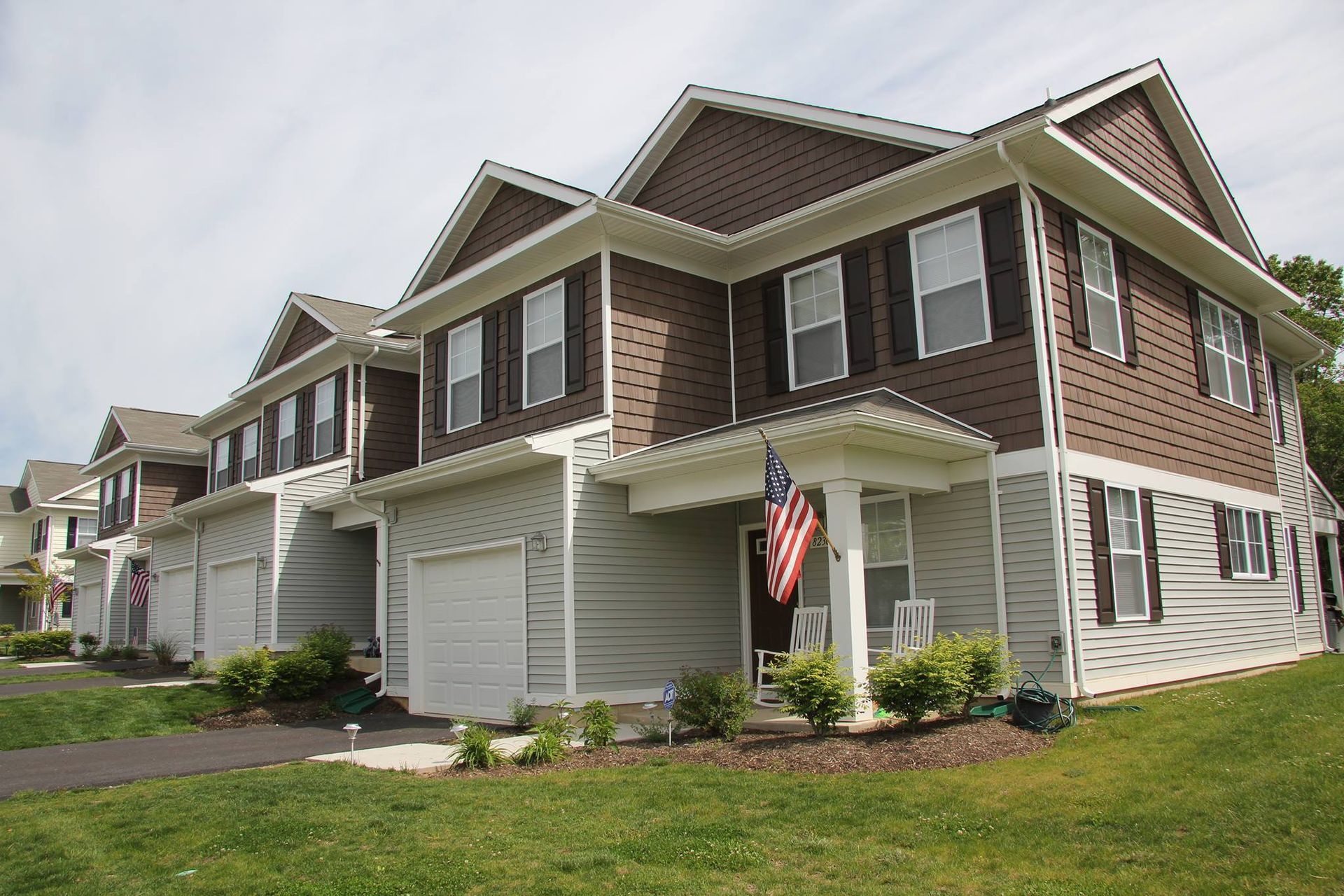
Townhomes with gray siding, brown brick-like panels, and white trim. American flag hangs on front porch.
By Lisa Iannucci, Post & Courier February 24, 2026
Military Housing
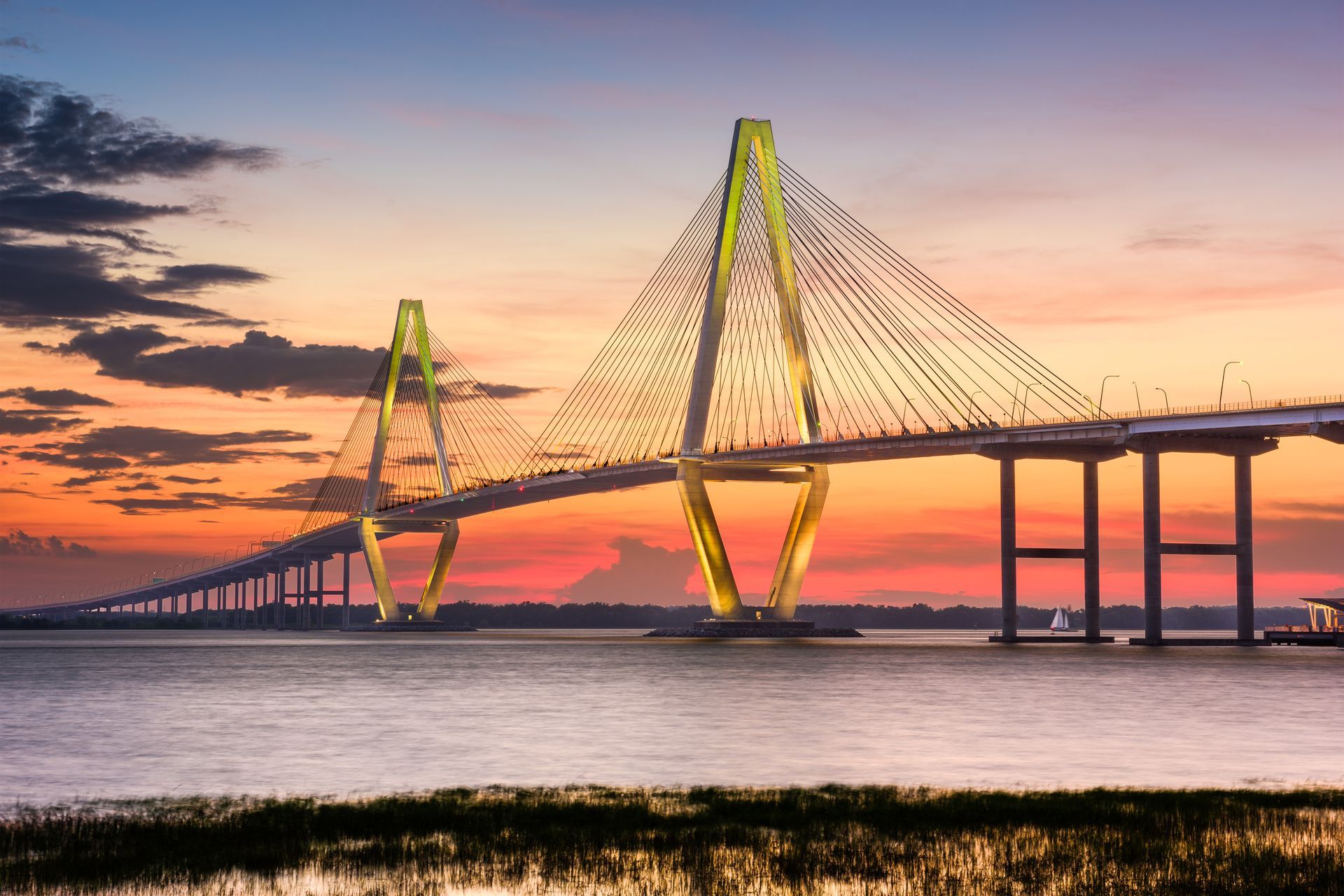
Charleston SC bridge at dusk
By Roni Haskell February 10, 2026
A Charleston Economy Update
Fountain with palm trees against a pastel sunset sky.
By Roni Haskell December 10, 2025
Charleston real estate started 2025 on steady ground with encouraging signs for buyers and sellers alike.
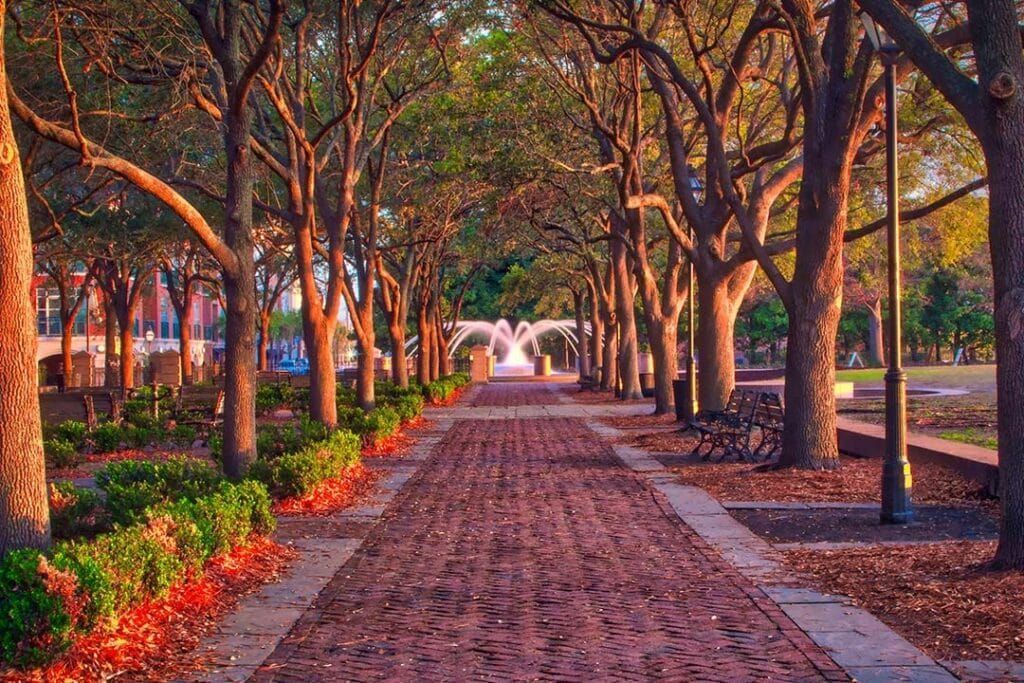
Brick path lined with trees and manicured bushes, leading to a fountain under an archway.
By Roni Haskell November 19, 2025
A lot of buyers are waiting for rates to fall into the fives before they make a move.
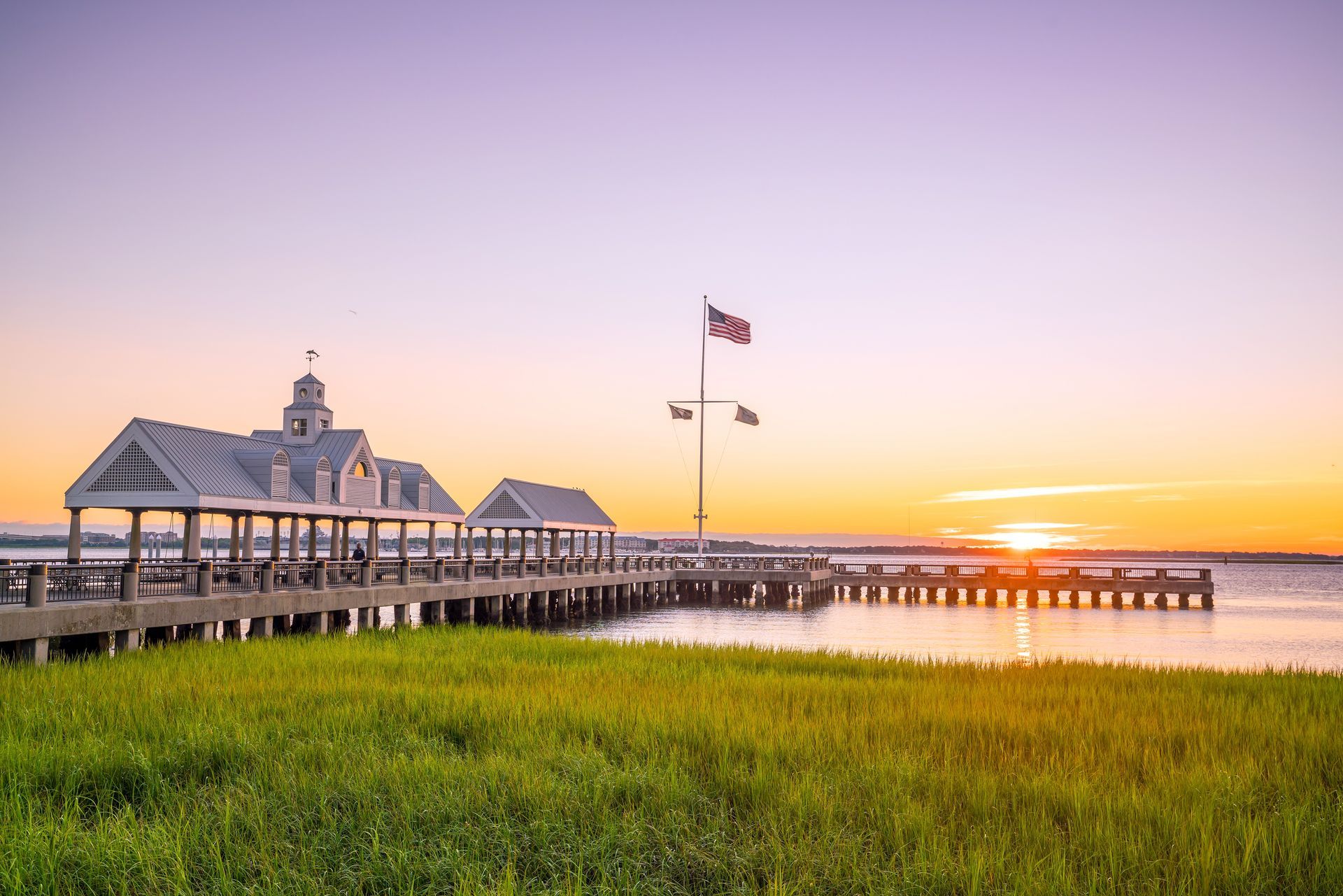
Wooden pier with covered sections, American flag, grass in foreground, and sunset.
By Roni Haskell November 11, 2025
Charleston’s Economy Is on a Roll!
Government shutdown
By Roni Haskell October 16, 2025
Charleston SC market update
Charleston, SC
By Roni Haskell October 16, 2025
Charleston, SC economy update
Hand holding magnifying glass over house-shaped blocks with percent signs, set against a blue backdrop.
By Roni Haskell September 17, 2025
Mortgage rates won’t fall in lockstep with the Fed, but if rate cuts continue, affordability could improve. Now’s a smart time to talk strategy.
More Posts